⇅ Visual sociology
⇄ Media & Fashion Infrastructures
⇅ Queer Studies
⟶ Floriane Fo Misslin (they/iel) is a researcher, lecturer and design educator.
Fo is a senior lecturer at London College of Communication (UK) and a doctoral researcher in Visual Sociology at Goldsmiths University of London (UK).
⟶ Fo's doctoral research is a sociological investigation on infrastructures of fashion imagery production and representations of gender nonconformity.
They received the 2025 Emerging Scholar Award by the International Journal of Fashion Studies for their article Gender nonconformity at an impasse: Infrastructures of fashion production in London’s editorial photography (forthcoming).
⟶ In their teaching, Fo combines critical studies on the production of visual culture with design methodologies and practices. Working with professionals and students in the creative industries, they develop participatory visual research methods reworking the use of mood boards and diagrams.
They are a contributor to Futuress, an international, queer intersectional feminist platform on design.
↺ Follow them on Instagram for the freshest updates.
Get in touch ⟶ fomisslin@gmail.com
Fo is a senior lecturer at London College of Communication (UK) and a doctoral researcher in Visual Sociology at Goldsmiths University of London (UK).
⟶ Fo's doctoral research is a sociological investigation on infrastructures of fashion imagery production and representations of gender nonconformity.
They received the 2025 Emerging Scholar Award by the International Journal of Fashion Studies for their article Gender nonconformity at an impasse: Infrastructures of fashion production in London’s editorial photography (forthcoming).
⟶ In their teaching, Fo combines critical studies on the production of visual culture with design methodologies and practices. Working with professionals and students in the creative industries, they develop participatory visual research methods reworking the use of mood boards and diagrams.
They are a contributor to Futuress, an international, queer intersectional feminist platform on design.
↺ Follow them on Instagram for the freshest updates.
Get in touch ⟶ fomisslin@gmail.com


Infrastructures of fashion imagery production: Promises and constraints of gender nonconforming creative labour in London
[working title]☞ Through a queer-feminist infrastructural lens, this doctoral research examines the conditions under which gender nonconforming uses of womenswear and menswear are possible, contained, or managed in the production of editorial fashion imagery in London.
☞ In contrast with representation studies that analyse images already in circulation, the thesis brings attention to the production processes prior to an image's publication. Drawing from interviews with 21 practitioners, Fo points at a cis-heteronormative infrastructure of fashion production as a complex assemblage of materiality, affect, policies and habits that regulate gender nonconforming creative labour, affecting the livelihoods of those practicing it and the gender representations emerging from these networks.
☞ This highlights the taken-for-granted infrastructure of an industry that benefits from aesthetics transgressing its womenswear / menswear distinction, yet hinders the conditions in which these are produced.
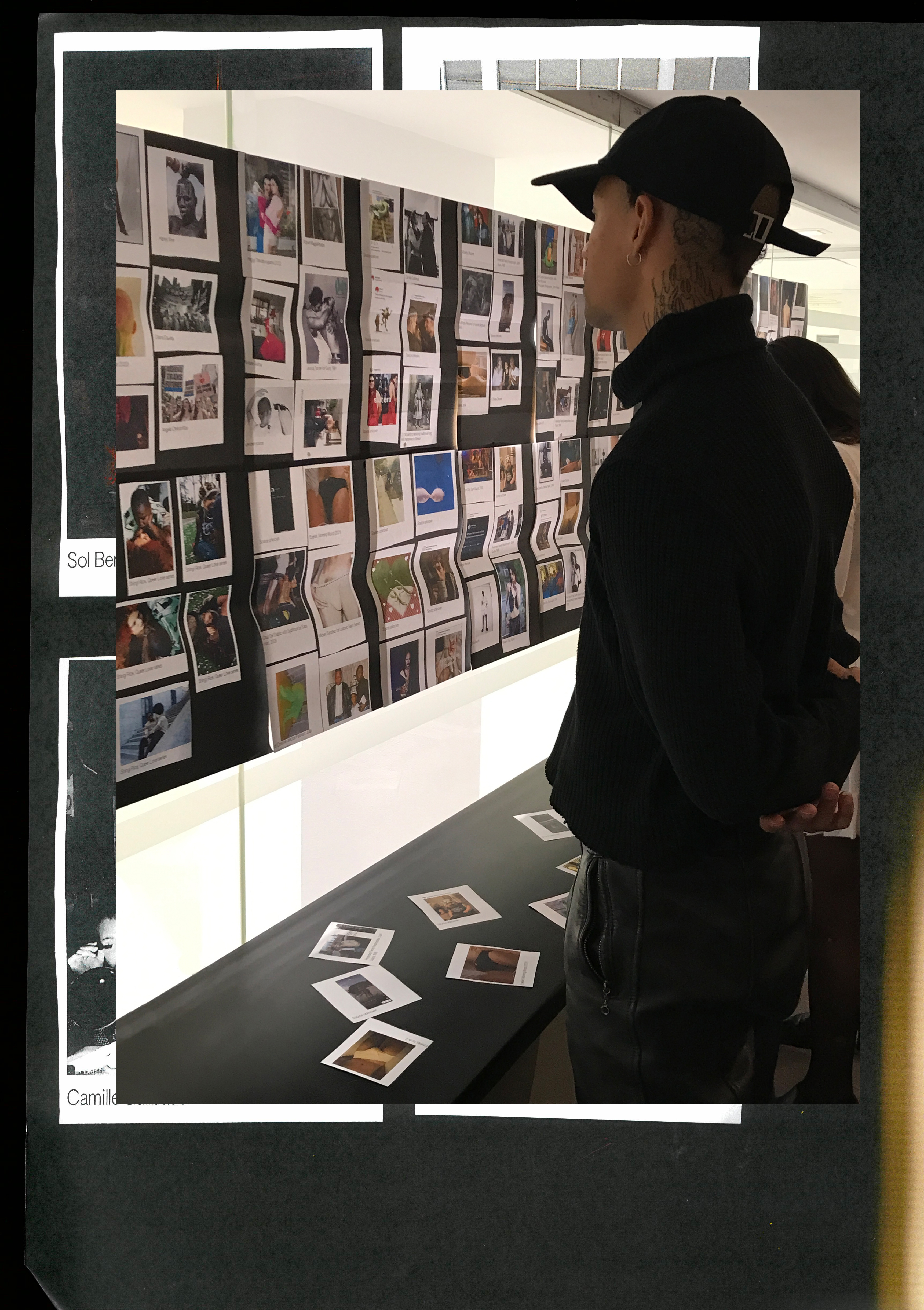
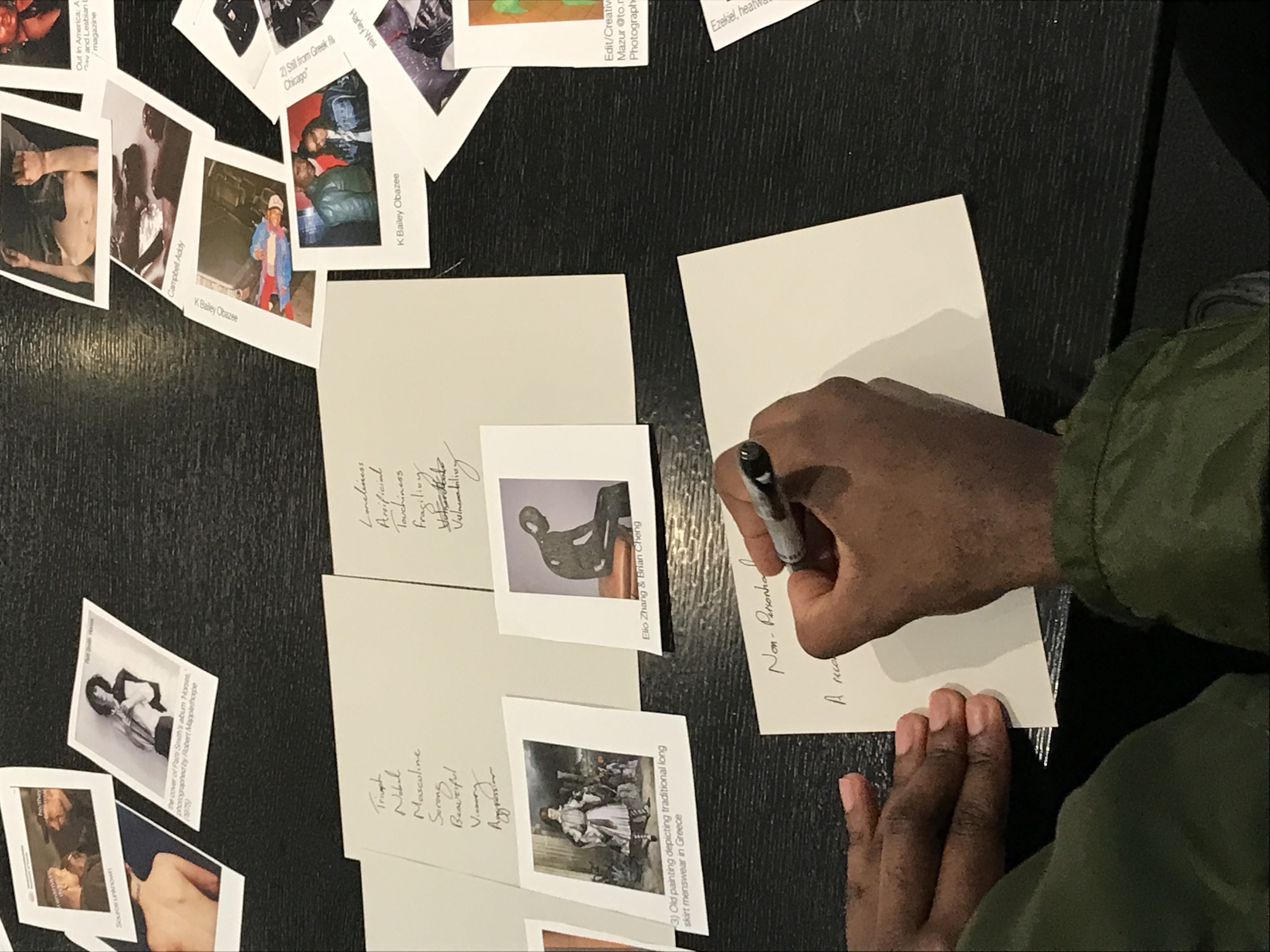
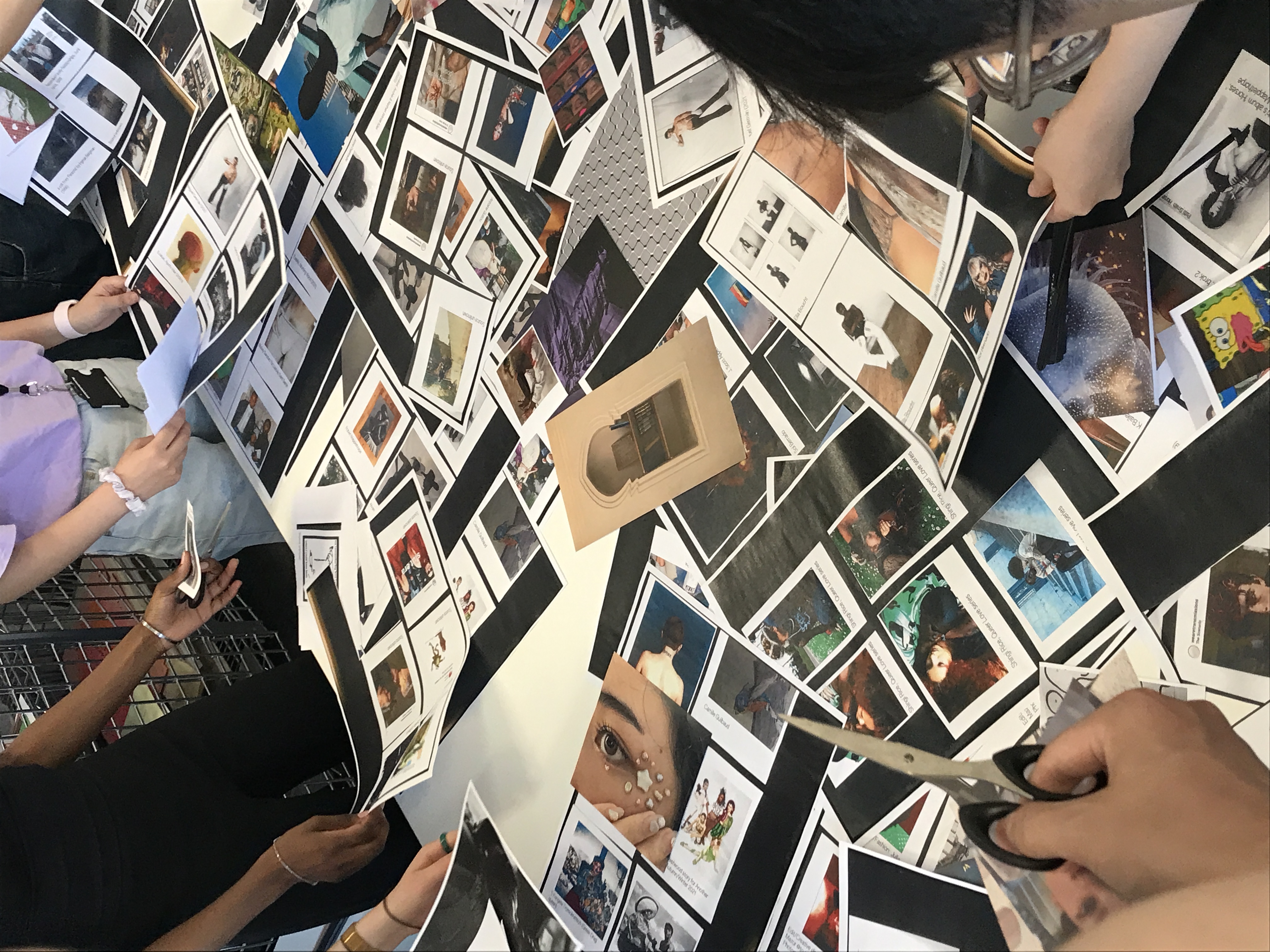
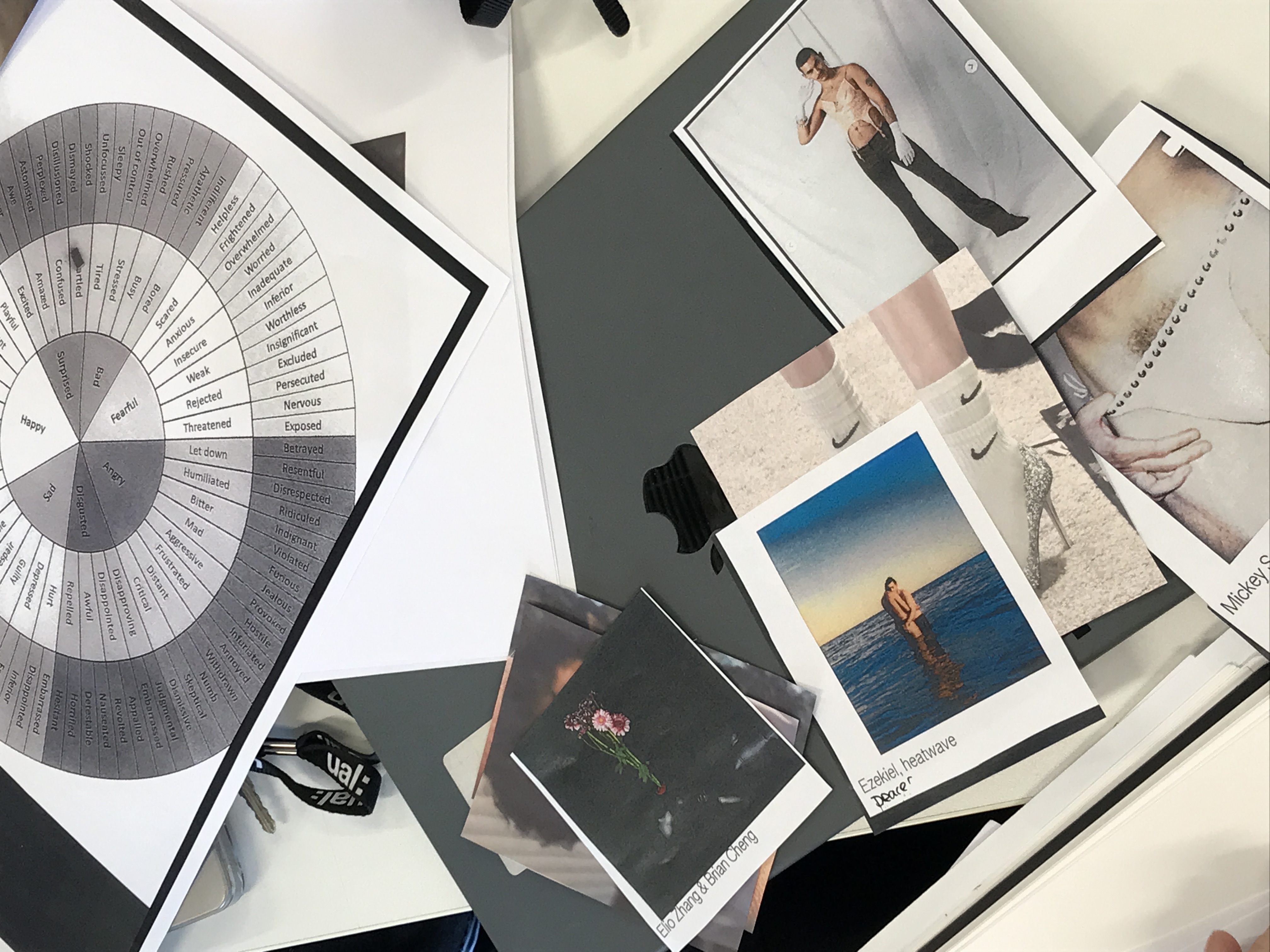
⟶ The images are scans from the diagrams used during interviews with practionners, visualing the intangible processes and relationships that impact the negotiations of creative labour.
⟶ Ongoing doctoral research in Visual Sociology, Goldsmiths University of London, since 2020

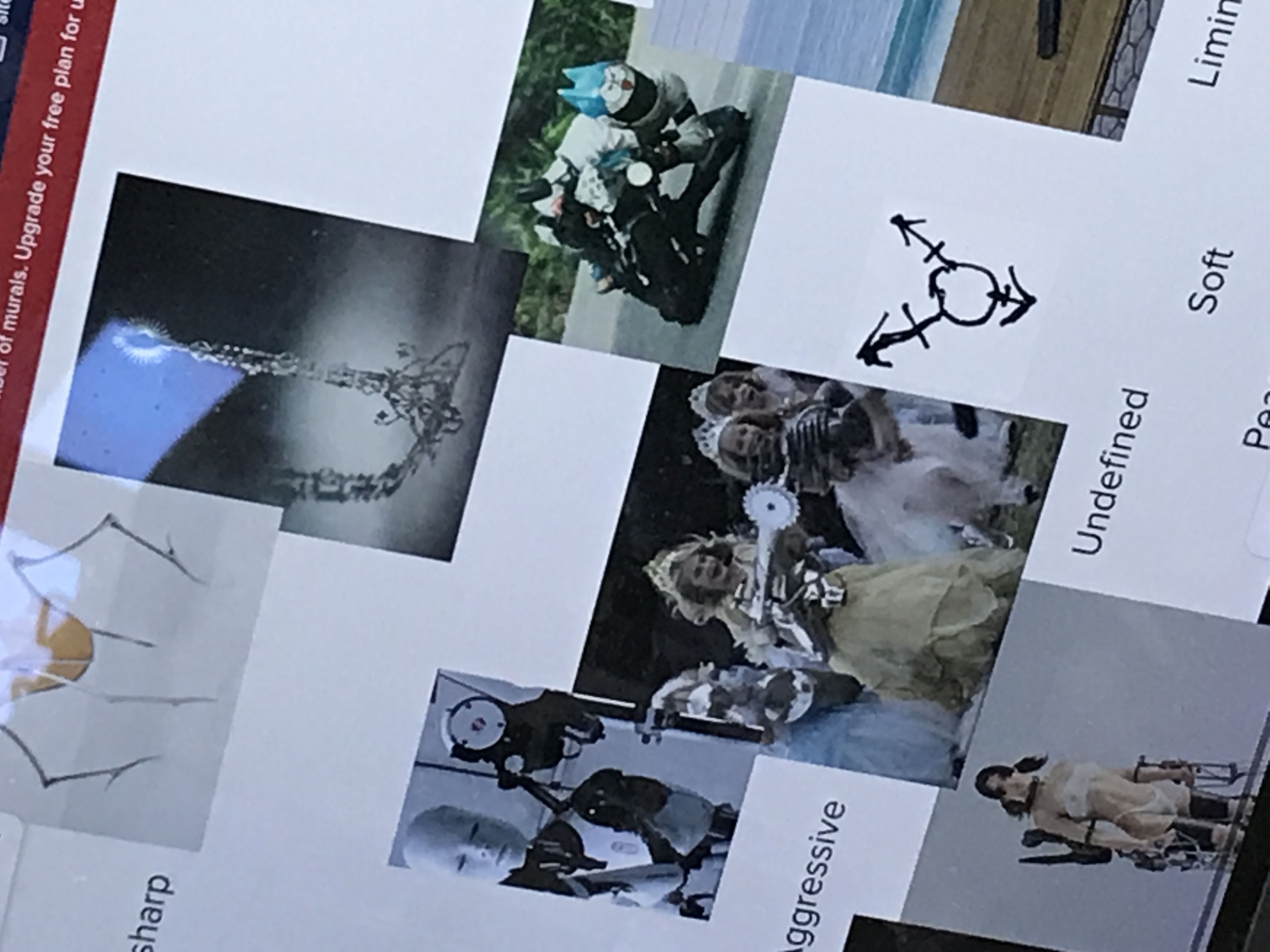
Mood boards as a citational practice
Series of Workshops☞ These workshops rework the mood board as a visual research method. The project draws from Sara Ahmed’s politics of citations to encourage creative practitionners in considering the political and ethical responsibilities of using past images to inform our future projects.
☞ Read Fo’s short essay on Futuress: Creating Feminist Paths with Mood Boards: Suggestions for an intersectional feminist citational practice to visual references
⟶ Ongoing series of workshops done at:
London College of Fashion in the "Queering Fashion" BA module (UK, 2022-2023),
MA Design: Expanded Practice at Goldsmiths University of London (UK, 2022),
MA Graphic Media Design at London College of Communication (UK, 2023),
KASK, Ghent (Belgium, 2024)
MA Graphic Design at Camberwell College of Arts (UK, 2026),
FHNW, Basel (Switzerland, 2027)
⟶ Exhibited at Fashion Space Gallery in 2022
⟶ 2022 to now
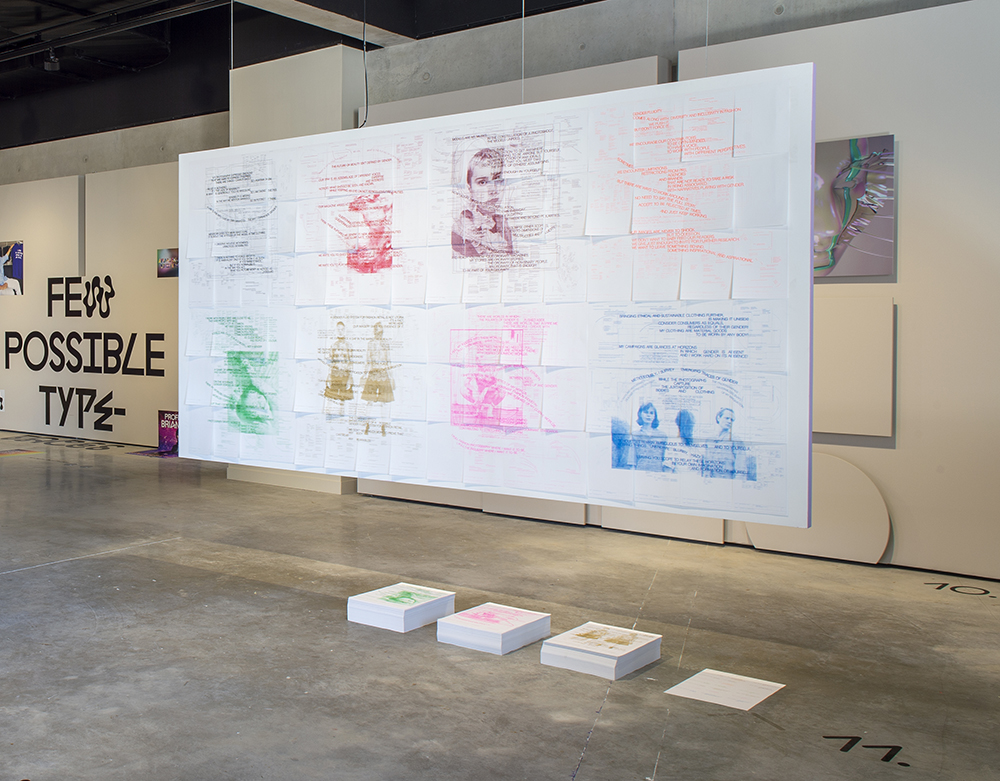
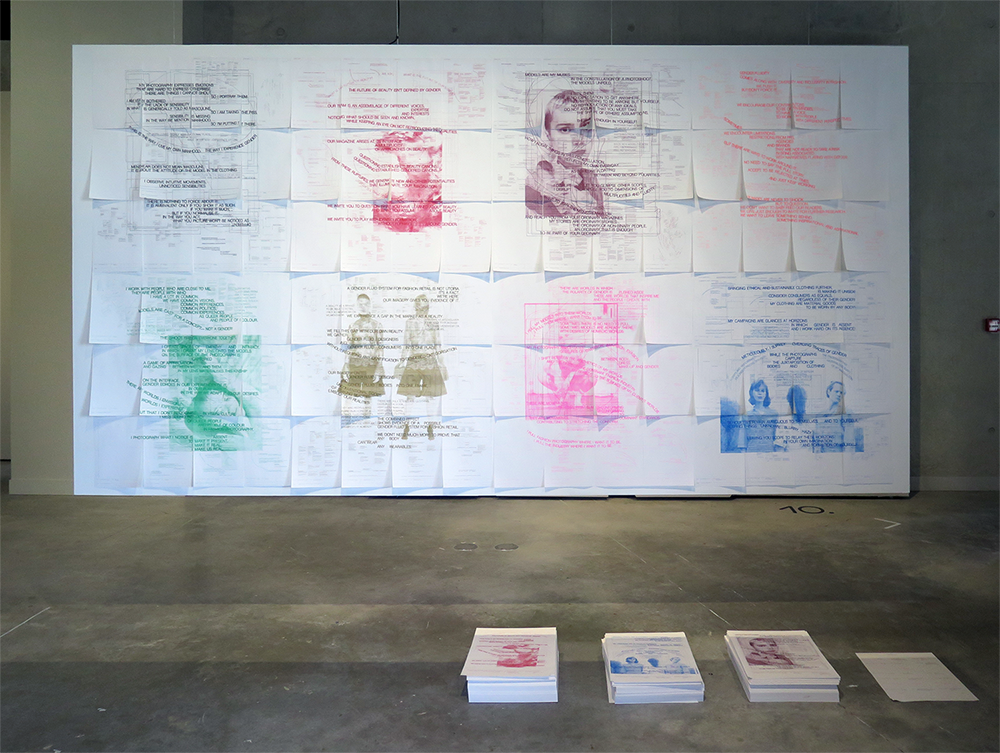

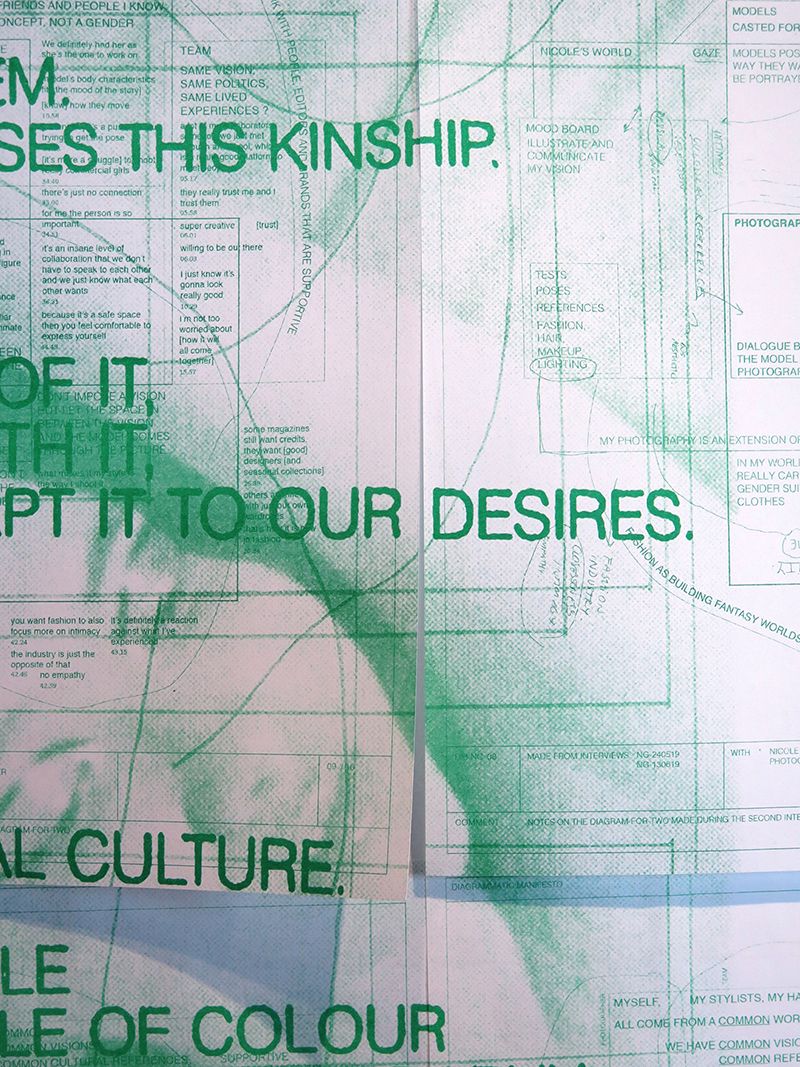
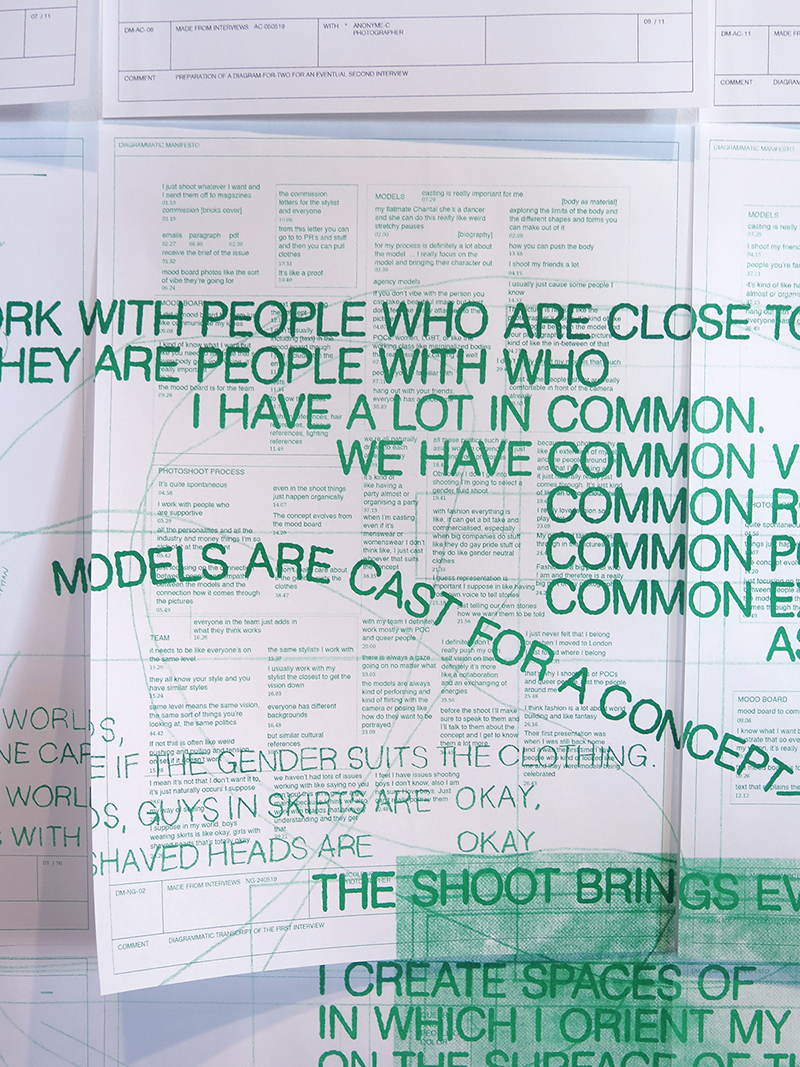


Diagrammatic Manifestos: Fashion Photography Beyond Womenswear / Menswear
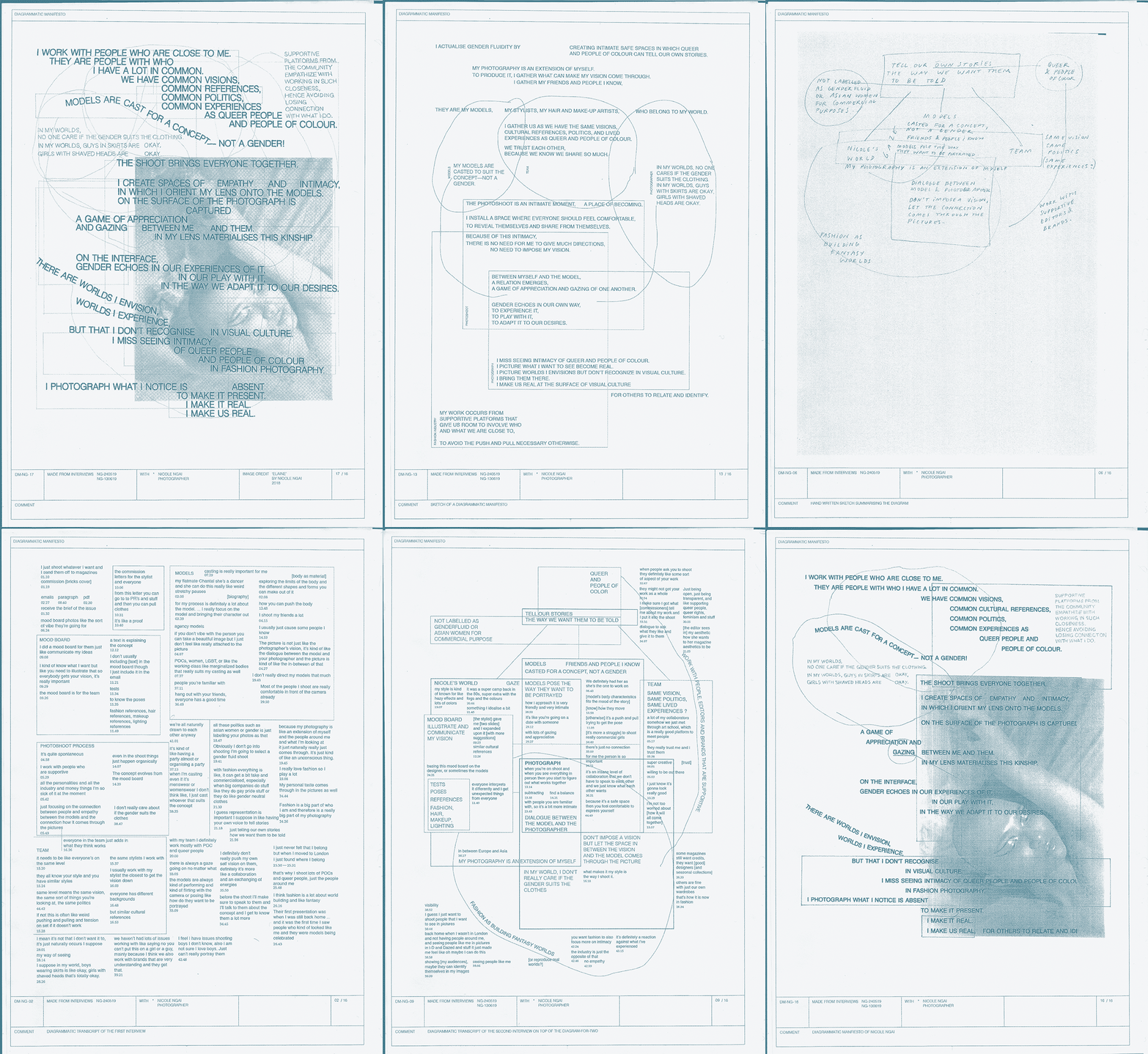
☞ Eight interviews of London-based fashion producers are transcribed in the form of diagrams across multiple pages in this installation about their work to challenge the distinction of womenswear and menswear.
⟶ Exhibited at Viral, Le Signe, for the graphic design biennale at Chaumont, France, 2020
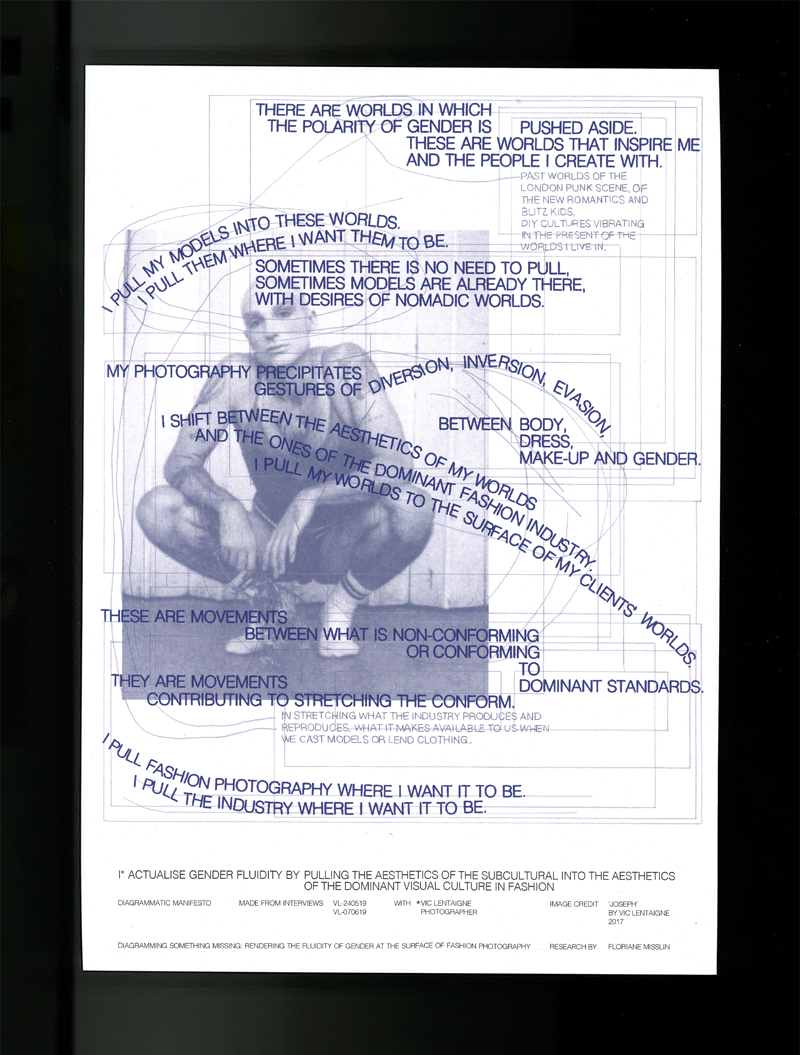
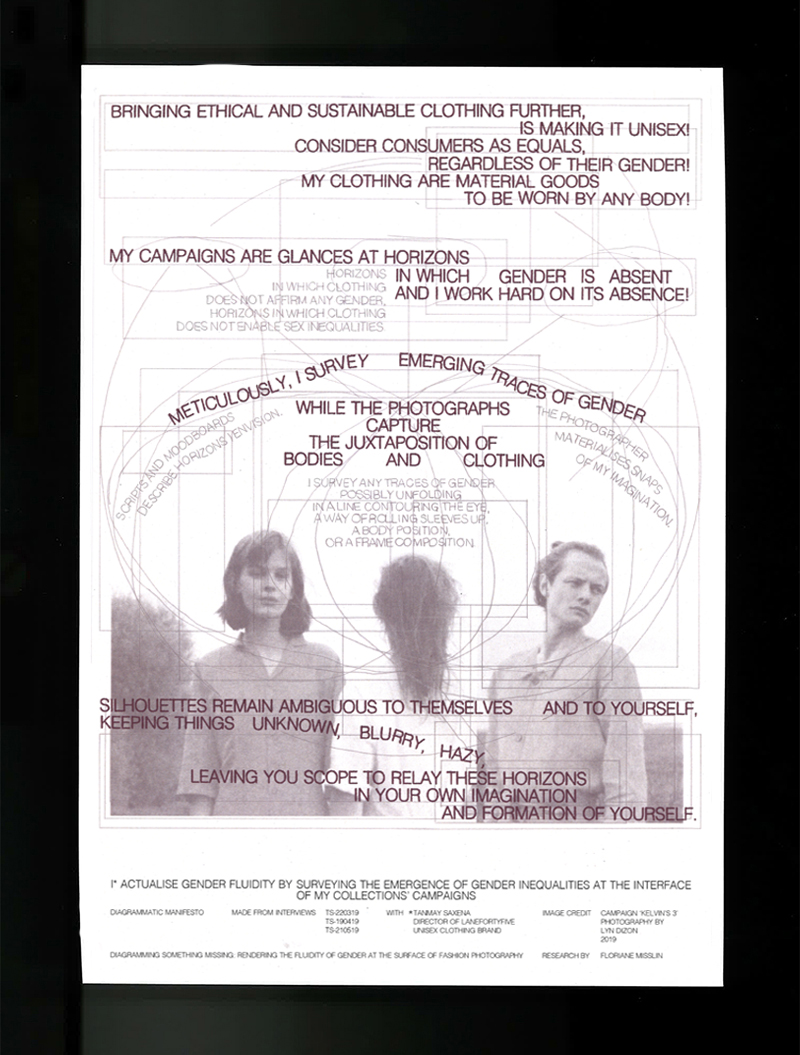

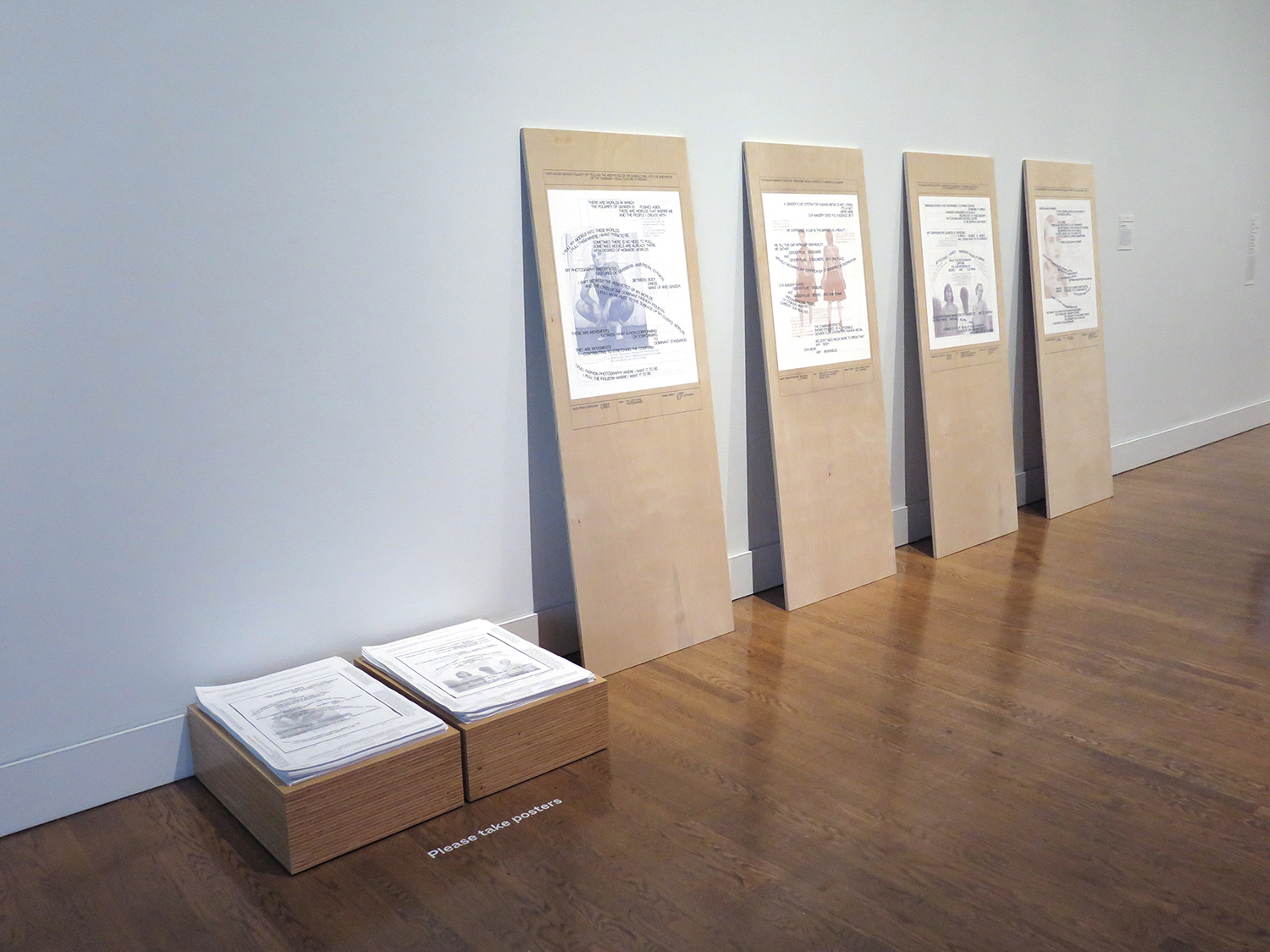
Diagrammatic Manifestos: Fashion Photography Beyond Womenswear / Menswear
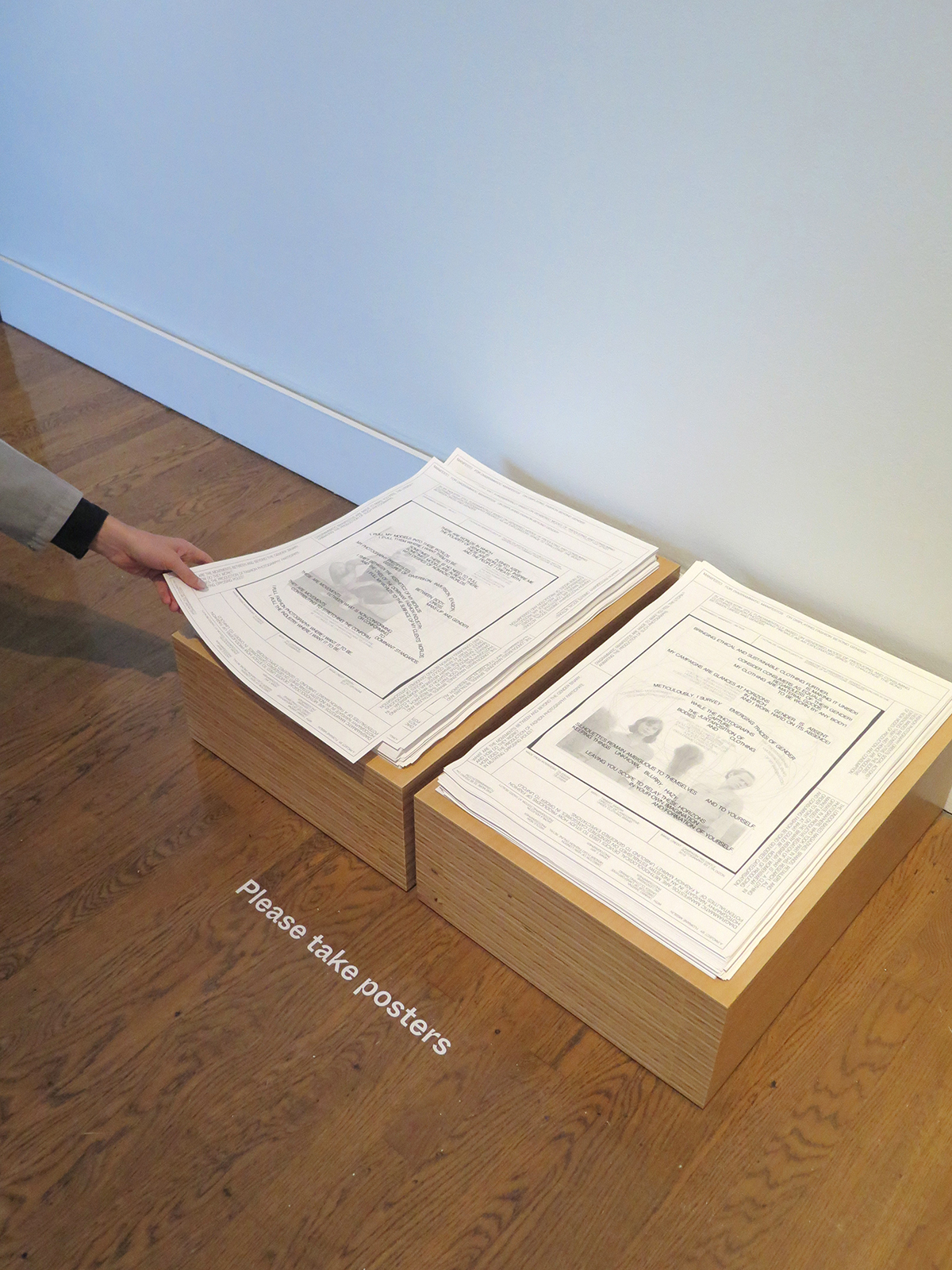
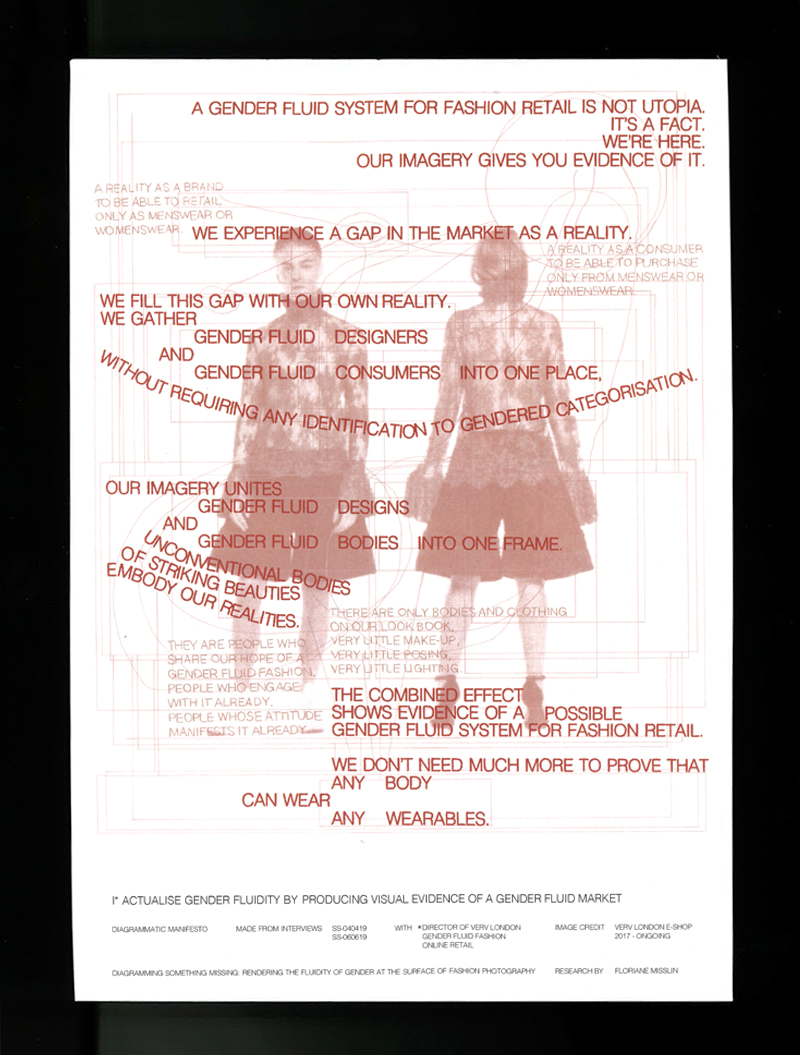
☞ Four posters commissioned for the exhibition Designs For Different Futures based on interviews with fashion producers challenging heteronormative representations of gender and sexuality in fashion. The interviews and manifestos were initially done for my MA dissertation.
⟶ Exhibited at Designs For Different Futures, Philadelphia Museum of Arts (2019), Art Institute of Chicago (2020), and Walker Art Center (2021),US
Diagrammatic Manifestos:
A Method for Studying the Fluidity of Gender in the Production of Fashion Photography
☞ An article reflecting the the method of Diagrammatic Manifestos I developped in my MA dissertation in Visual Sociology. The method consists of editing manifestos with participants through a series of 2 to 3 interviews, expressing each of their unique approach to challenge fashion beyond womenswear and menswear.
⟶ Published in the peer-reviewed journal Fashion Studies, Volume 3, Issue 1, 2020
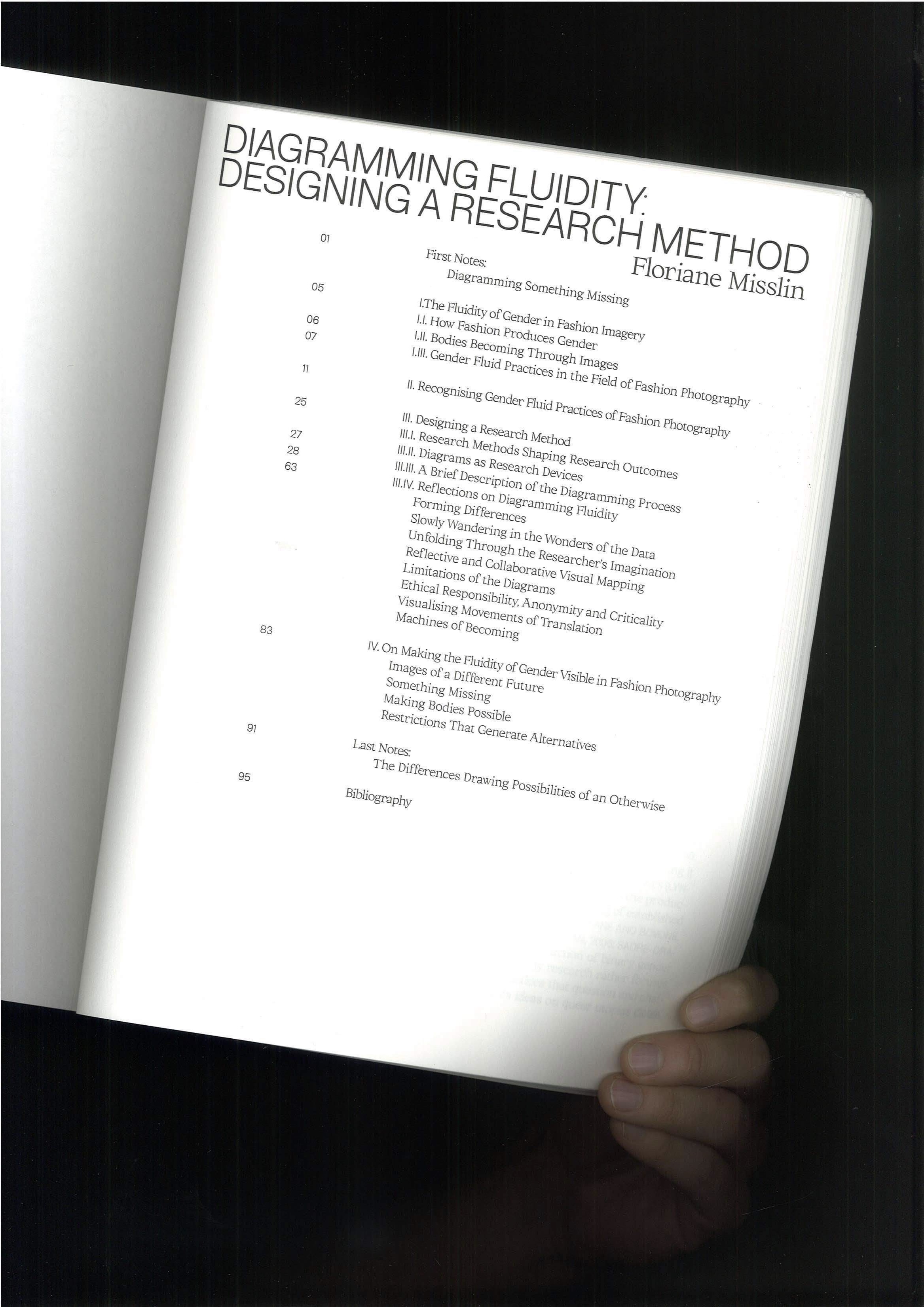
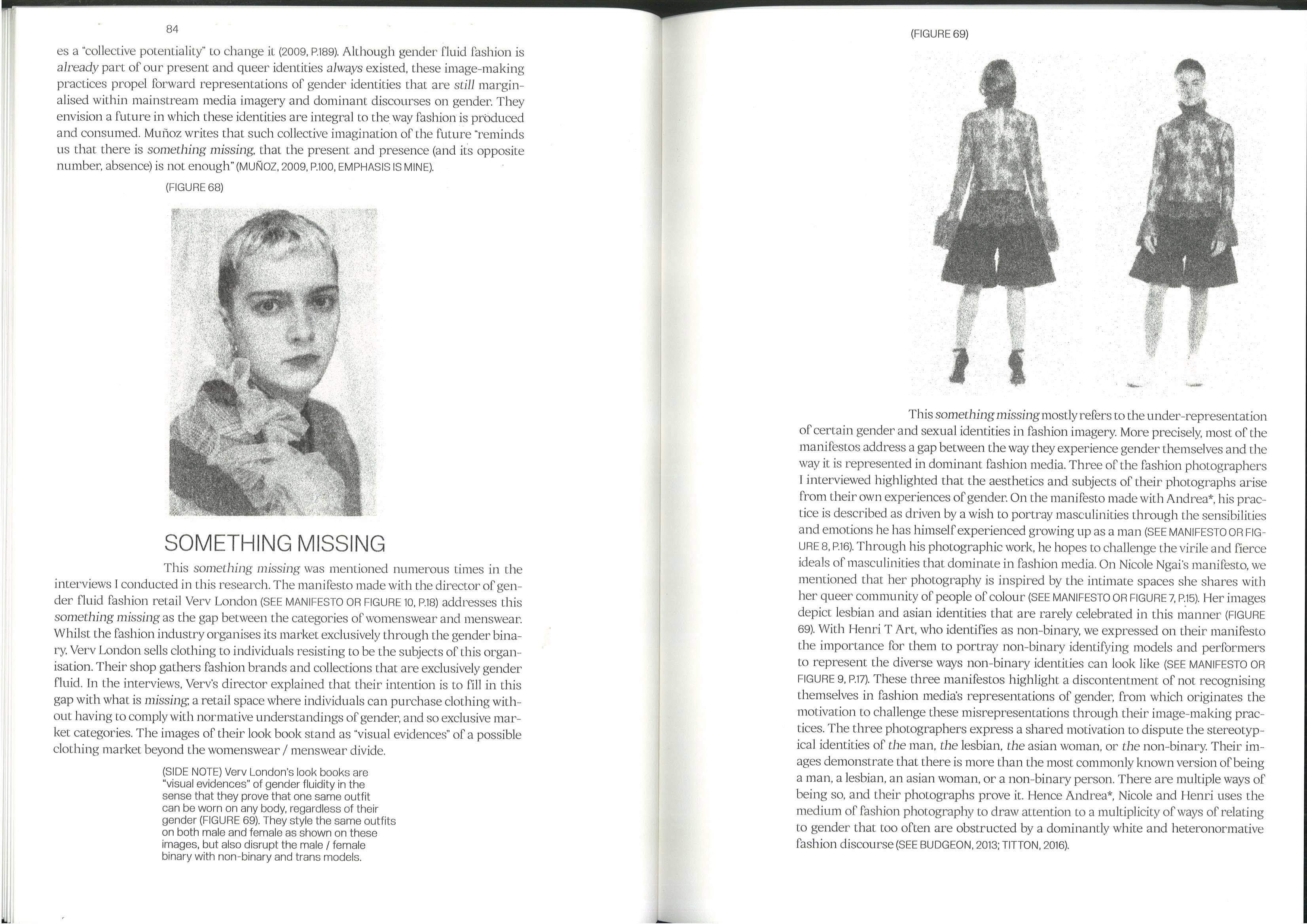
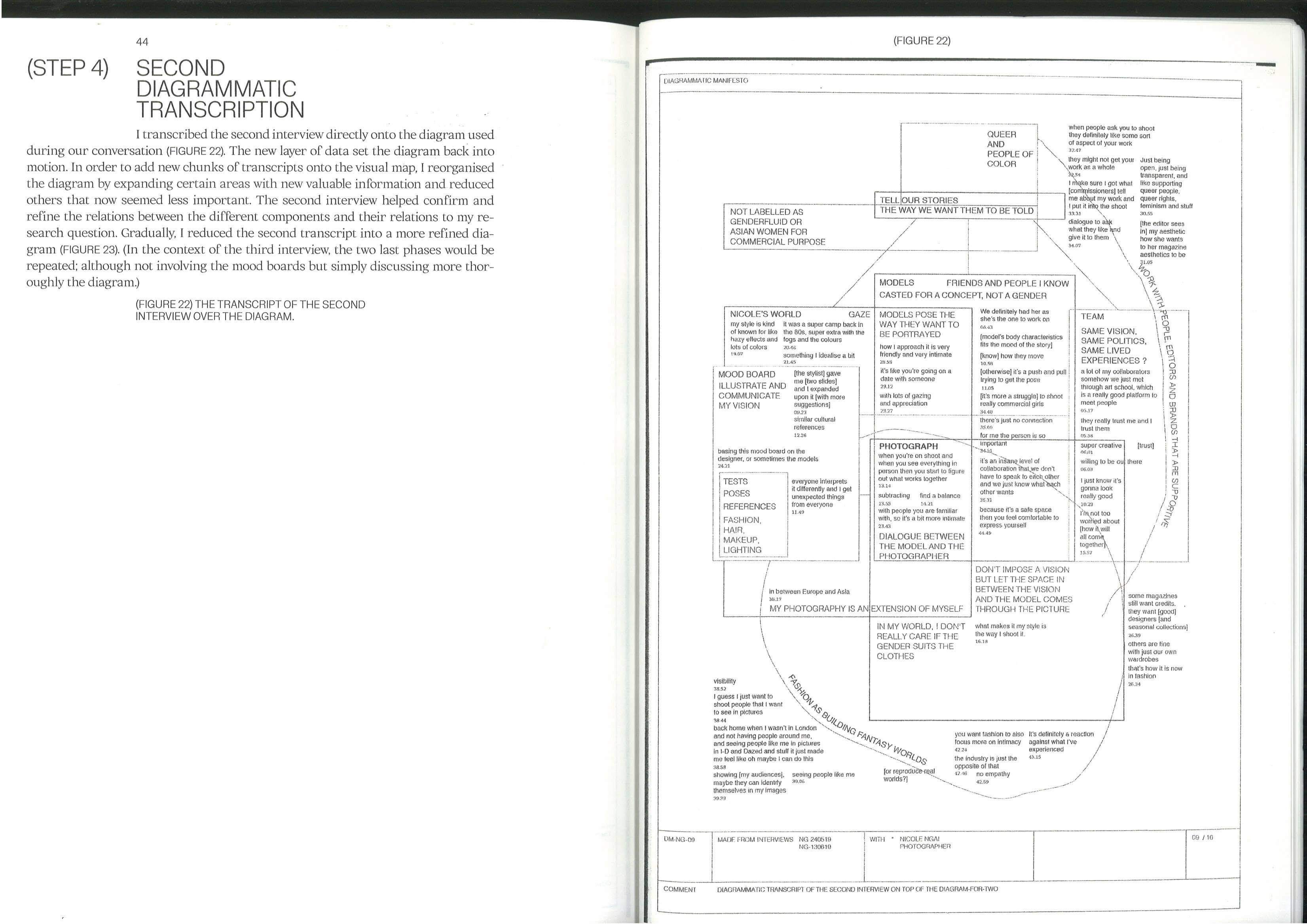
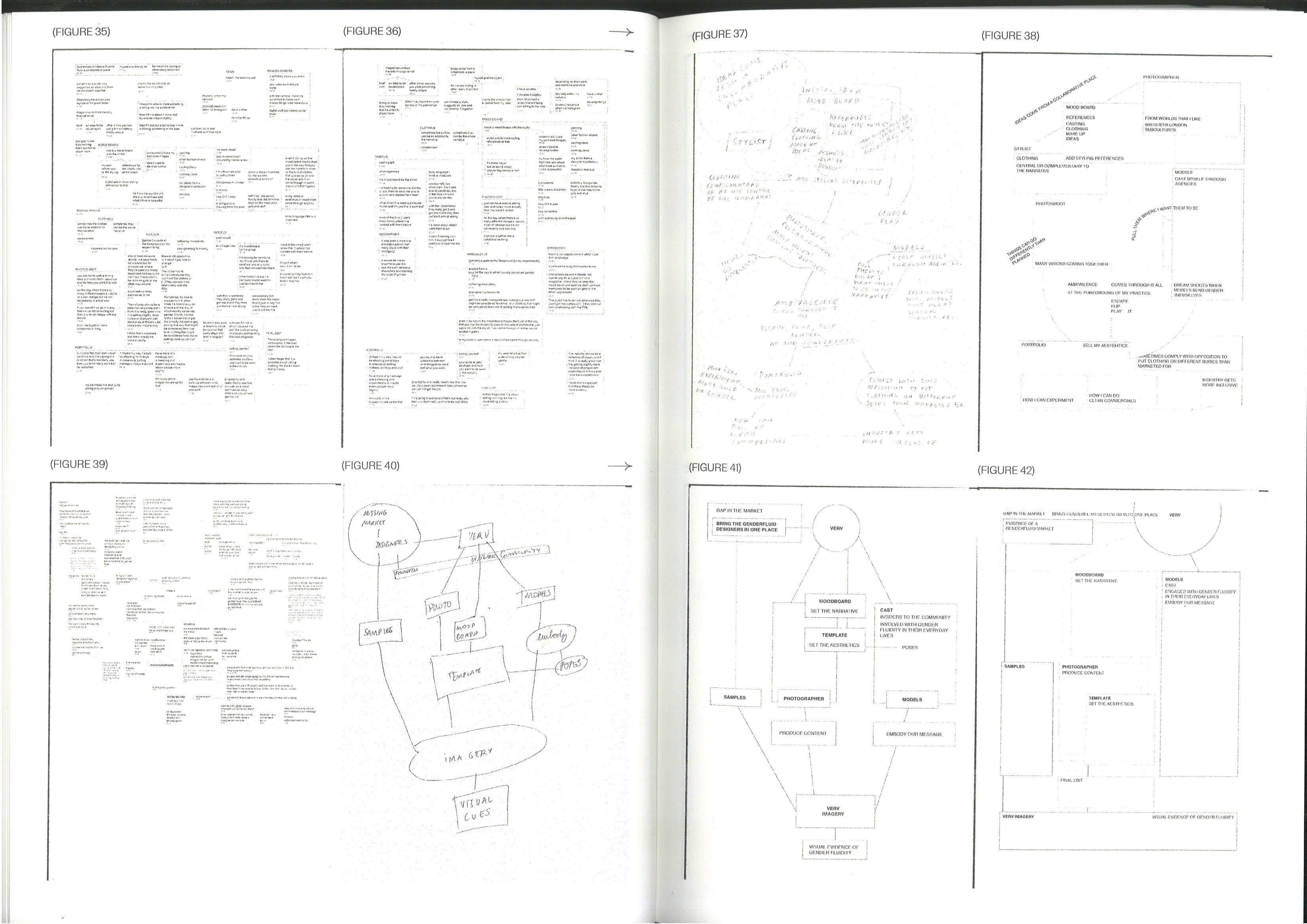
Diagramming Fluidity: Designing a Research Method
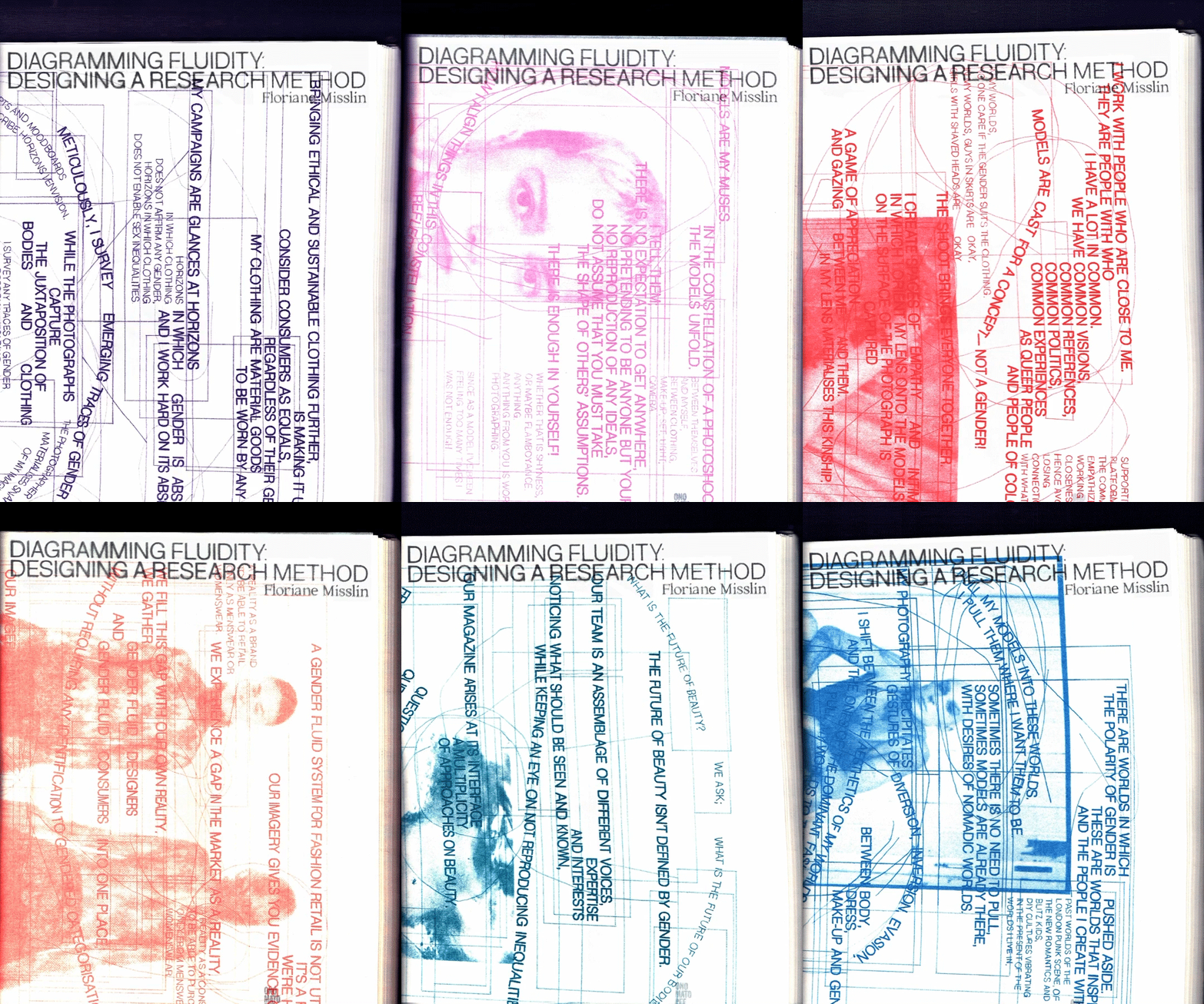
☞ An expanded version of my MA dissertation was published as a riso-printed book, reflecting on the design of my research method and findings.
⟶ Published with Onomatopee, 1st edition in 2020 and 2nd edition in 2021